An HLO certificate proves someone passed a course. It does not prove they can run your helideck on its worst day.
A qualification builds the foundation. Competency is what sits on top of it, and it only stays there if it is maintained. Without an enforced structured learning plan, two things happen quietly. Skills fade because emergency procedures are rarely practiced or tested, and habits form because crews fill the gaps with whatever works for them. Workarounds become routine, shortcuts become culture, and best practice stops existing as a shared standard.
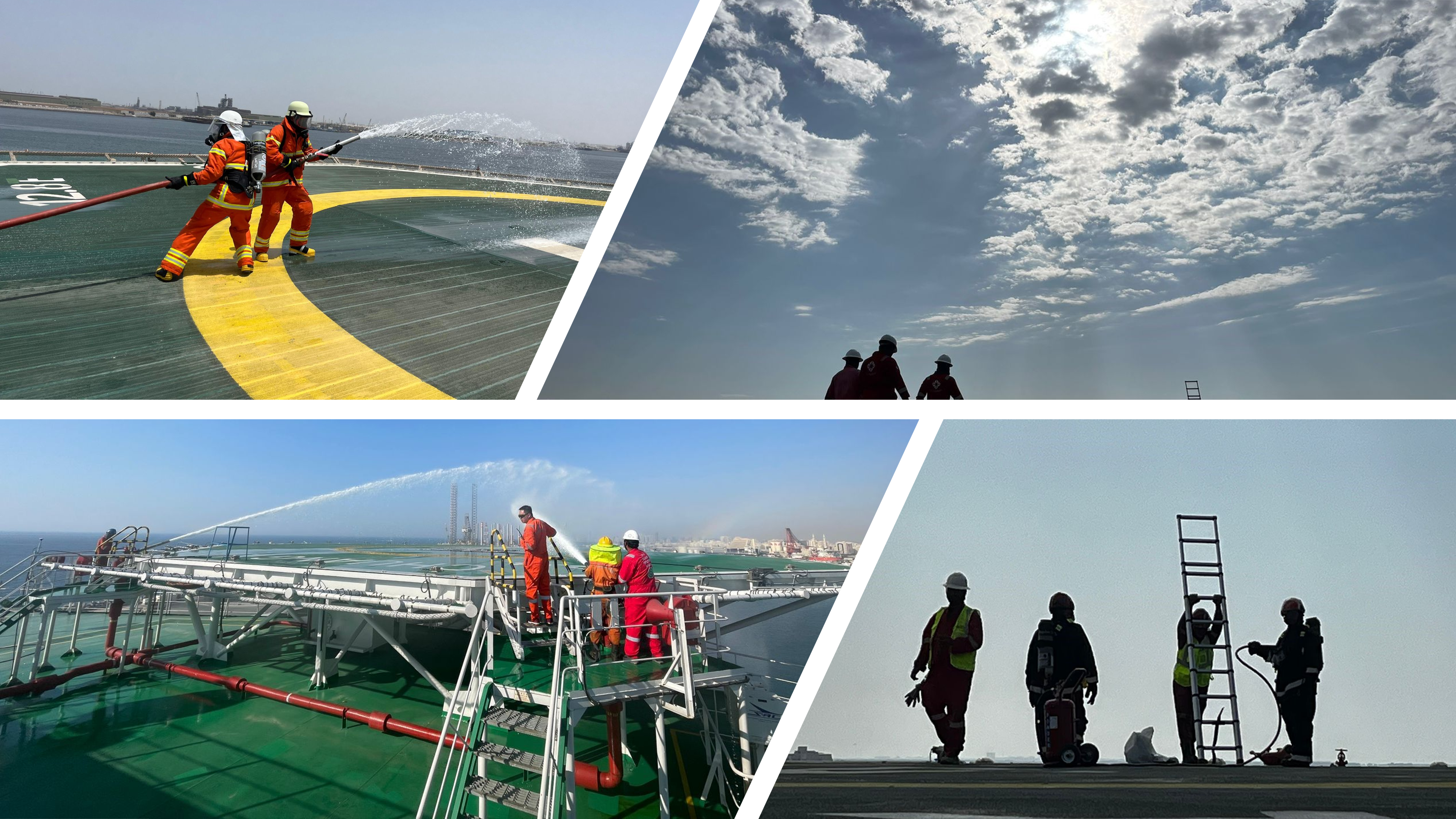
Picture two shifts on the same installation running the same firefighting drill in two different ways. Both are confident. Both learned it from the person before them, not from a standard.
Nobody chooses this. It is what happens when development is left to chance.
A structured learning plan fixes it by giving every crew member the same standard, built around your installation rather than a generic syllabus. To start:
- Map the competencies each role needs.
- Build the plan around your specific helideck, considering expected aircraft types, available firefighting equipment (portable and fixed), firefighting team size, escape routes, and the helideck’s position on the vessel.
- Conduct a baseline competency assessment for each crew member.
- Establish a recurrent training cycle at defined intervals, covering toolbox talks, tabletop exercises, and drills.
- Assess against the standard, record the results, and close the gaps.
- Review the plan after every near miss, incident, and audit finding.
Done well, the SLP becomes the proof that your certificates mean something.
Audit-ready is a position on paper. Emergency-ready is a position on the deck.